how to draw a 3d square with shading
This tutorial explains how to shade basic 3d shapes such as cubes, spheres, cylinders and cones. These shapes can considered the "building blocks" for drawing more circuitous objects.
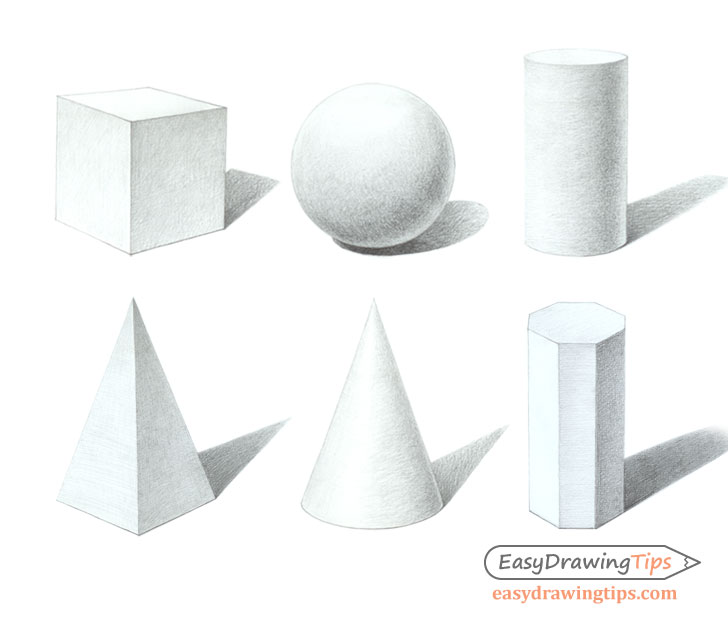
Learning to correctly draw and shade bones iii dimensional shapes is very important for beginner artists.
Please note that in order to go along the tutorial accurate all of the examples were drawn from real life objects. As a result this likewise created some small variations in the lighting atmospheric condition between them due to the main light source (the dominicus) moving through out the 24-hour interval. This is merely stated so that yous know why some of the lighting is slightly unlike and has no real affect on the tutorial. All objects all the same accept one main light source coming from the tiptop left and slightly to the front of them. If you were to have one of these in front of yous in a similar lighting setup then the calorie-free would be coming over your left shoulder.
Before getting started on this tutorial you may also desire to learn nigh different types of shading strokes by looking at:
Shading Techniques and Stroke Types Drawing Tutorial
Also please be aware that different artists may adopt different shading methods. For example some may use elementary 1 directional strokes while the method in this tutorial is to apply the strokes in such a way as to aid emphasize the shape of the object.
How to Shade a Cube
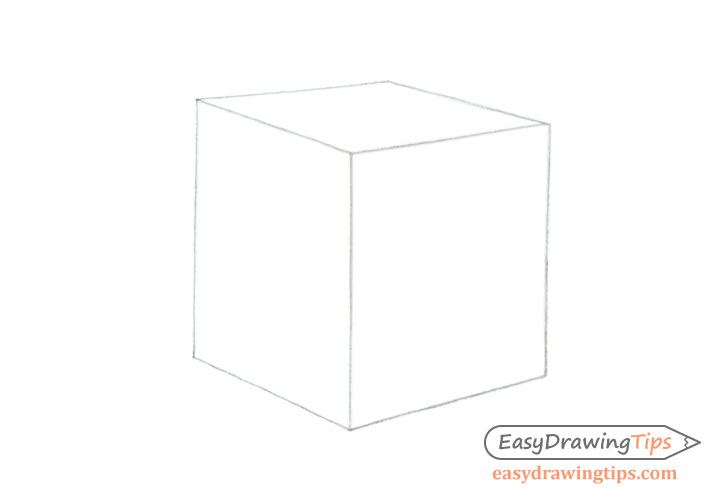
Start by make a in perspective light line cartoon of the cube. You lot tin can encounter the Perspective Drawing Tutorial for Beginners for an caption on how to do this.
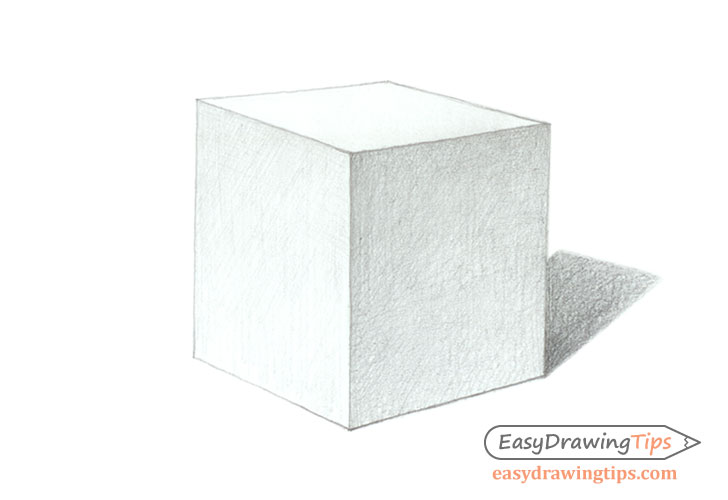
Earlier applying the shading in that location are a few things you should be aware of. One is that generally cubes tend to have a light, medium, and a dark side. Another is that each side volition also tend to take a low-cal to dark slope of its ain. In the above case the superlative side of the cube is the lightest and the correct side the darkest. The gradients on the left and right sides of the cube are lighter towards the bottom and darker towards the pinnacle. This is acquired by the reflection of the main low-cal source from the surface that the cube is sitting on.
The cube will as well cast a shadow directly contrary the low-cal source. In this example it will be to the right and slightly behind it. Equally the primary light source is fairly bright and high up higher up the cube it will create a well defined brusque shadow. Because the cube is white the shadow will also be significantly darker.
For the bodily process of shading the cube you can utilize direct crosshatch strokes. For each side offset make a set of strokes parallel to it's perspective lines and afterwards apply some other set up of strokes at a dissimilar bending. The first set up of strokes volition aid reinforce the shape of the cube while the other set will help blend the shading making it announced more natural.
You can use a crosshatch for shading the shadow as well. Start past making strokes along it'southward general direction and and so add a 2d layer on a slight bending to the first one. Make the shadow darker at the base (well-nigh the cube) and lighter equally it moves away form it. Y'all tin also brand the edges of the shadow more blurry the farther away it is from the object.
How to Shade a Sphere
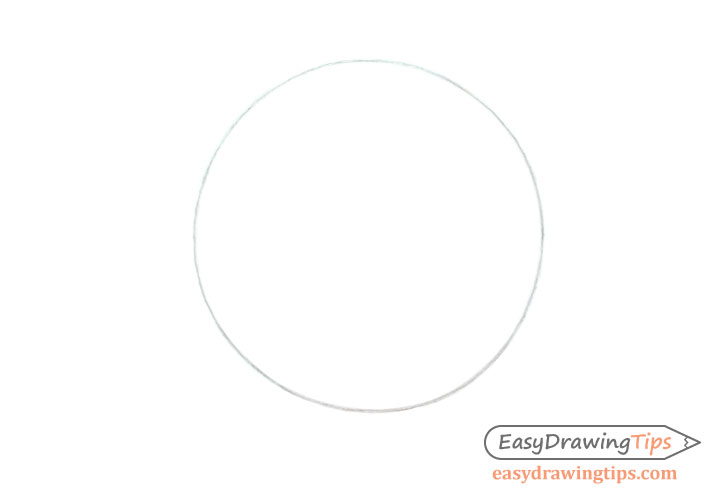
Start the cartoon of the sphere by simply making a circle.
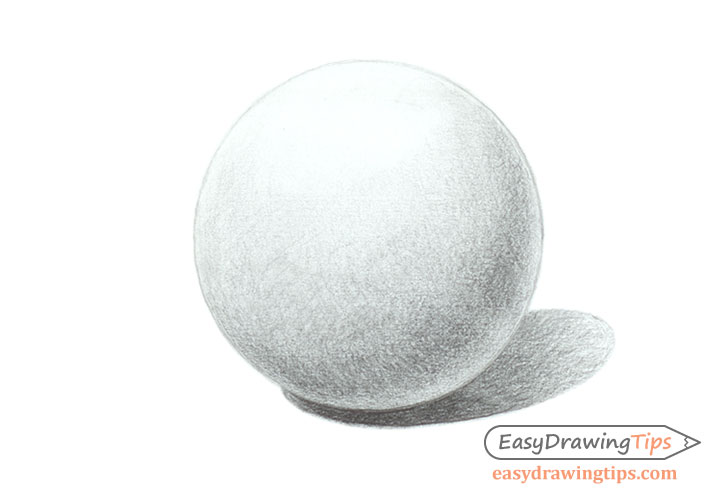
For the "one light source" bones setup we are using the surface of sphere will gradually transition from information technology's lightest signal (top left in this case) to dark and so to light again. The 2d transition will be due to the lite reflecting from the surface it'southward resting on. It's also important to note that the light area created by the reflection will not exist as vivid as the surface area lit past the main light source.
The darkest area is the indicate at which the bend of the sphere faces the farthest away from both the primary light source and the reflection.
Similar to the previous example the shadow will be cast opposite the main light source (to the right and slightly behind the sphere).
When shading a sphere a skilful option may be to utilise lightly curved crosshatch strokes equally the curves tin can aid emphasize the spheres round shape. You can employ the first set in any random direction. Apply the 2nd assail an angle to the get-go ane.
Unlike the sphere you can use straight crosshatch strokes for the shadow. You can also apply the commencement prepare in whatsoever management y'all like with the second set on a slightly angle in relation to the first one.
Brand the shadow darker towards (right underneath the sphere) and lighter equally it moves abroad from it. You tin can also brand it'due south edges more blurry the farther it moves from the object.
How to Shade a Cylinder
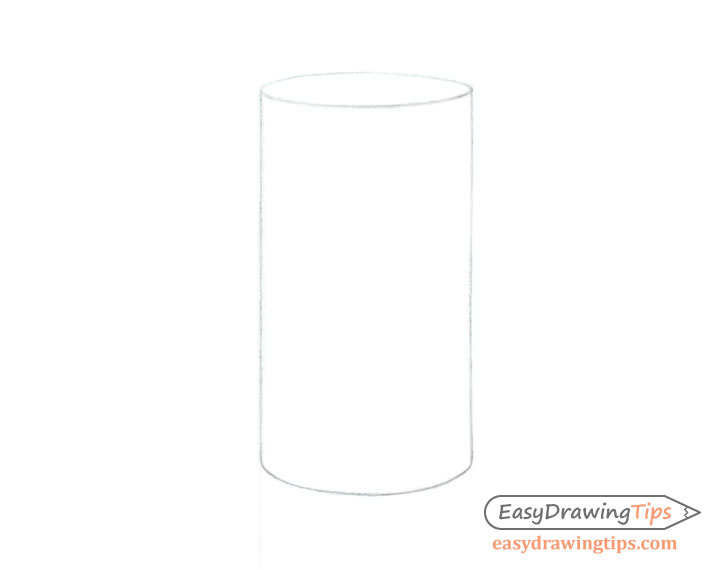
Start by making an in perspective line drawing of the cylinder. You lot tin encounter the How to Draw Cylinders in Perspective Tutorial for instructions on how to do this.
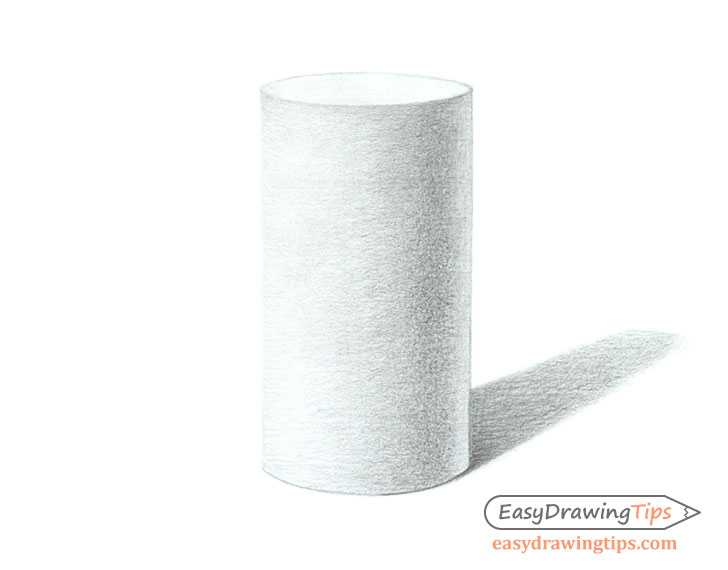
Shading the cylinder will be somewhat of a combination between the sphere and the cube. In the lighting setup described before it will take a calorie-free top with the rest transitioning from light to dark and then to light again.
Equally the curve of the cylinder gets farther away from the main light source it will become darker. By that it will become lighter once again every bit it curve turns more than towards the lite reflecting class the surface. The darkest area will one time again (like the sphere) exist the point of the curve uttermost from both the main calorie-free source and the reflected low-cal.
As the two previous examples the shadow volition exist cast opposite the main light source (to the right and slightly behind the cylinder).
Y'all can apply the shading strokes in a curved crosshatch that wraps along the shapes of it'south top and bottom curves.
Shade the shadow past making direct crosshatch strokes, darker at it's base and lighter and more blurry as it moves away from the object.
How to Shade a Pyramid
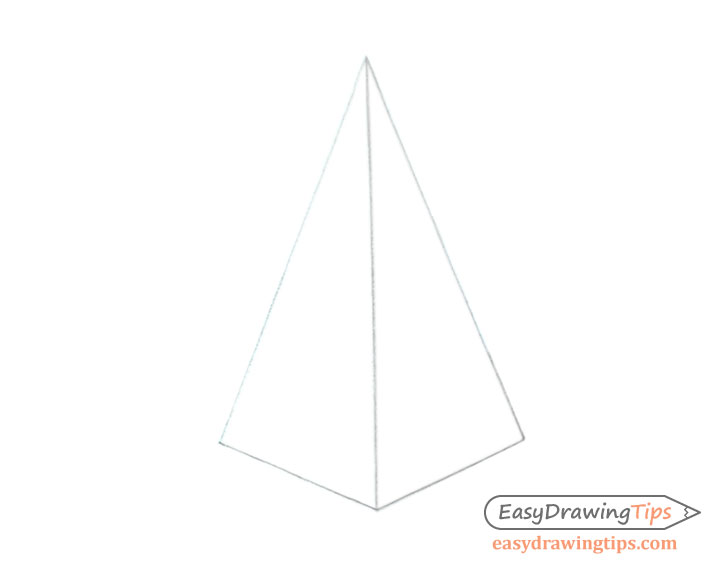
First make an in perspective line cartoon of the pyramid. For instruction on doing this see:
- How to Draw a Pyramid in 1 Indicate Perspective
- How to Depict a Pyramid in 2 Signal Perspective
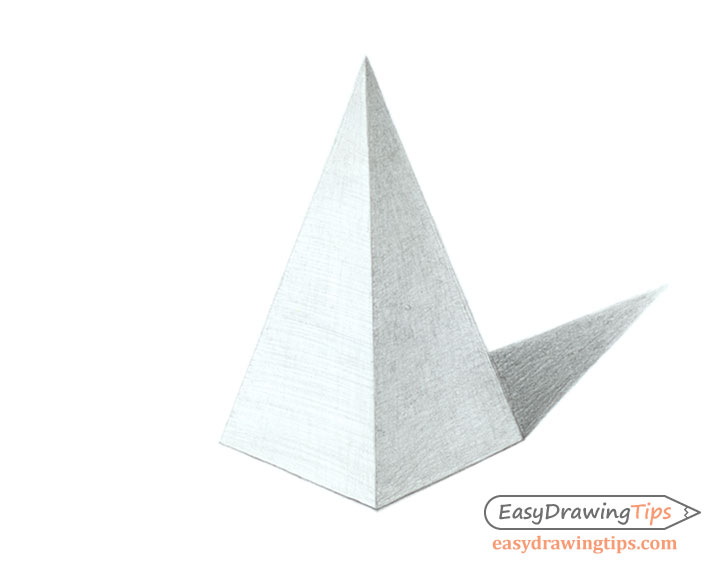
Shading a pyramid drawing like the i in this case is fairly elementary as there are only two visible sides. The side facing towards the calorie-free will be lighter and the side facing away from it volition be darker.
Like to the cube each side of the pyramid will also have it's own calorie-free to dark transition due to the reflection of the main light source from the surface that its sitting on. In a lighting setup such as that in the above example each side will transition from a lighter bottom to a darker top.
Same equally the other examples the shadow will be pointing directly abroad from the light source. In this case to the correct and slightly behind the objects.
Once again similar to the cube apply a two sets of direct strokes to create a crosshatch. Make the first sets follow the perspective lines of each side of the pyramid with the second set being on a slightly angle to them.
Brand the shadow darker at the base of operations and lighter and more blurry toward the tip.
How to Shade a Cone
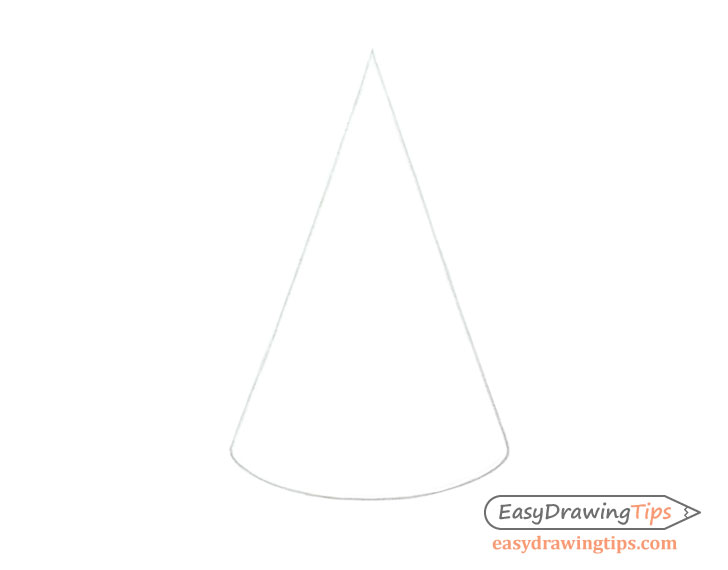
Brand a perspective cartoon of the cone. For teaching on doing this meet the How to Describe a Cone in Perspective tutorial.
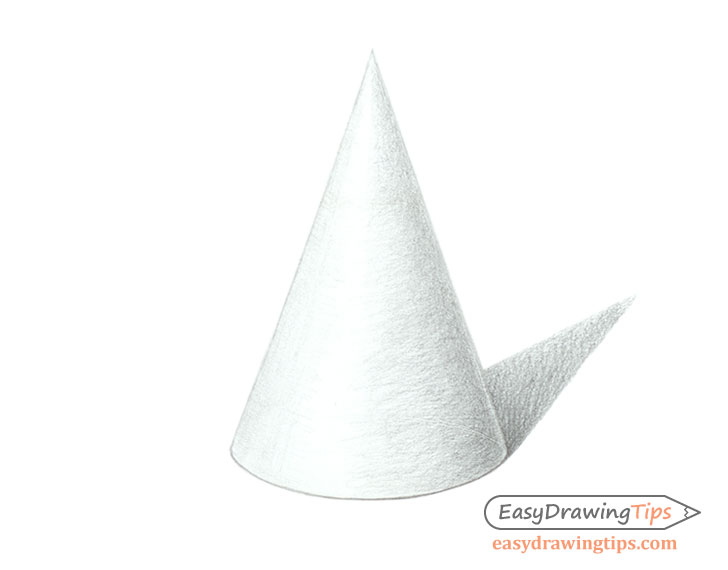
Every bit mentioned earlier the lighting conditions for this detail example are slightly different in that the main light source volition be a trivial more in front of it than in the other examples. This will move the lightest area of the cone slightly more towards it's center and create a gradient on its left going from left to dark. The correct side of the cone will transition from light to dark so to light once again (from the reflected light).
The shadow will once more exist pointing to the right and slightly behind the object (a fiddling more to the back in this case).
Shading the cone is very similar to shading a cylinder the but divergence is that everything will get narrower every bit it goes towards the top. Merely like the cylinder you tin shade it with a curved crosshatch strokes. Make the beginning set with curves somewhat matching the bend of it's bottom and the 2nd assault a slight angle in comparison.
The shadow will be pretty much the aforementioned equally that of the pyramid. Shade it with straight crosshatch strokes darker towards the base and lighter and blurrier towards the tip.
How to Shade an Octagonal Prism
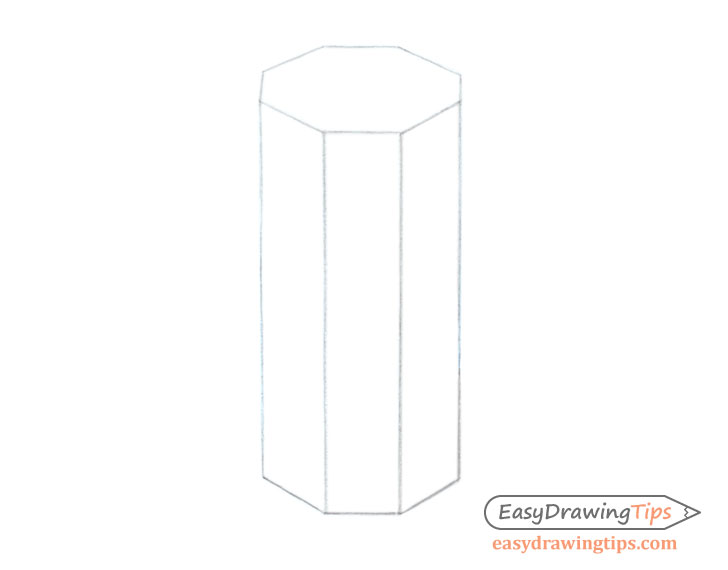
Start past making a low-cal line cartoon of the octagon prism. To do this you can offset describe a rectangular prism and then "trim" it's sides to get the octagon. You tin over again run into the Perspective Drawing Tutorial for Beginners for help.
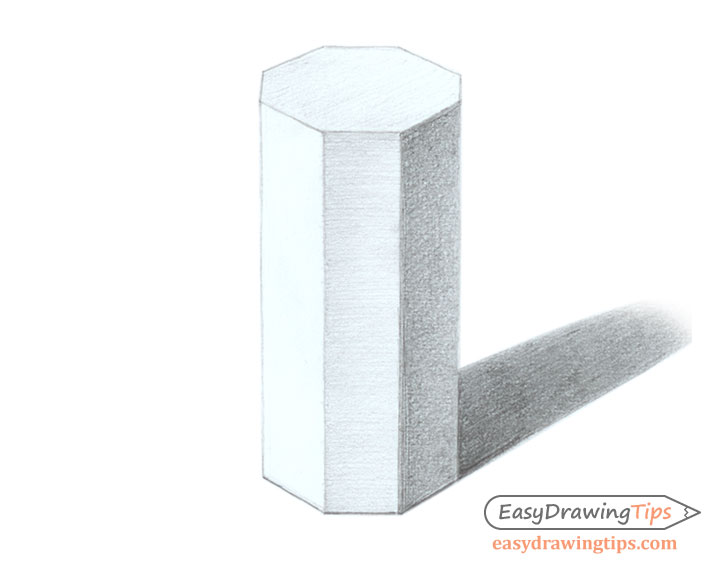
In the lighting weather condition described before the lightest side of the octagon prism will be on the left and the darkest on the right. The left side in this example is facing near directly towards the main calorie-free source and therefore is vivid enough that it does not actually need whatsoever shading.
Same equally the other examples the other sides of the prism will take their ain light to dark gradients. The lite reflecting grade the surface will over again brand these gradients lighter towards the bottom and darker towards the top.
The shadow will be cast contrary the main light source (directly reverse the left department) to the right and behind the prism.
As the sides of the prism are adequately narrow you can employ a unmarried prepare of i directional strokes or a crosshatch for shading them. In this example the middle section is done with ane directional strokes while the darker right side is done with a crosshatch.
Shade the shadow using crosshatch strokes with the first prepare along its general direction and the 2nd set angled in relation to that one.
For shading another similar object y'all can besides see:
How to Draw a Realistic Banana Tutorial
Conclusion
These 3d shapes are the basic building blocks of many more complex objects. Learning to properly draw and shade them can make it much easier to motion on to drawing things that are more complex.
For more similar tutorials also meet:
- Egg Step by Step Basic Shading Tutorial
- How to Draw a Realistic Pear Tutorial
Source: https://www.easydrawingtips.com/shading-basic-3d-shape-drawings-tutorial/
0 Response to "how to draw a 3d square with shading"
Post a Comment